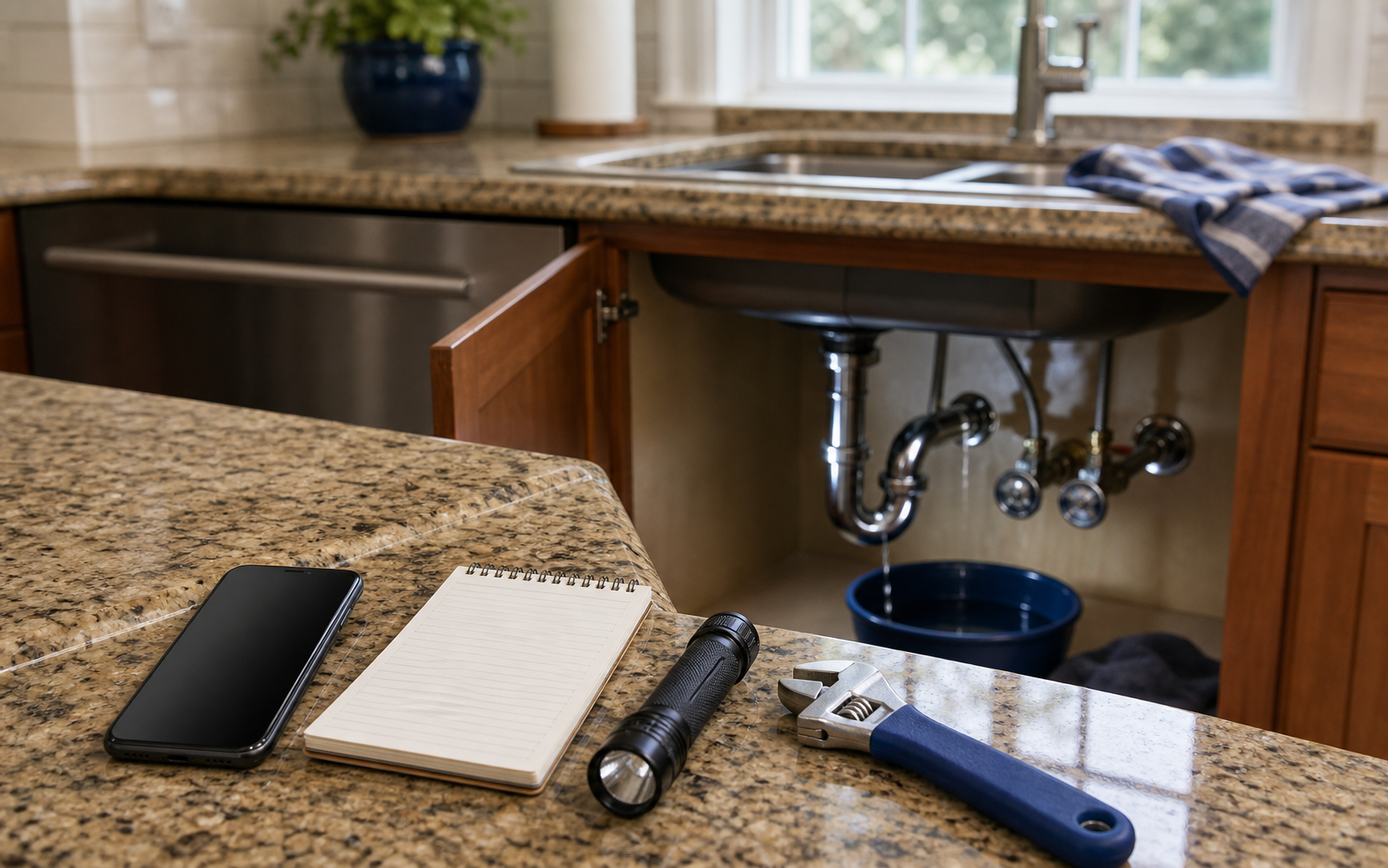
If water is moving, sewage is backing up, or a fixture will not stop overflowing, we treat the call differently than a normal plumbing appointment. Our first job is to help you reduce the damage, understand the risk, and decide what needs to happen next.
Call Us Now If Water Is Still Active
A burst pipe, failed supply line, leaking valve, or water heater leak can keep feeding water into floors, cabinets, ceilings, and wall cavities. Before we talk about the repair, we want to know whether the nearest fixture shutoff or main shutoff is working. If you can safely reach it, turning the water off can buy time. If you cannot find it or the valve will not move, tell us that right away so we can scope the visit around stopping active water first.
When we arrive, we look for the actual failure point instead of assuming the first visible drip is the whole problem. A ceiling stain may start at a bathroom supply, tub drain, toilet flange, refrigerator line, or pipe joint above. A puddle near a water heater may come from the tank, drain valve, relief valve, expansion tank, or nearby piping. We inspect, isolate, repair what can be repaired, and explain when a larger replacement or cleanup step is the more responsible answer.
Call Faster For Sewer Or Multiple-Drain Backups
One slow sink is frustrating, but multiple fixtures backing up at the same time can point to a main drain or sewer issue. We pay close attention when toilets gurgle, tubs fill with dirty water, floor drains overflow, or the lowest-level fixtures are affected first. That is not just a convenience problem. It can become a sanitation problem, especially in basements, laundry rooms, and finished lower levels.
We ask which fixtures are affected, whether sewage is present, whether any cleanout is accessible, and whether the backup changes when water is used elsewhere in the house. Those details help us decide how to approach the stoppage and whether follow-up inspection makes sense after the immediate backup is cleared.
What We Ask On The Phone
A clear emergency call starts with practical details: your Frederick-area address, the room or fixture involved, whether water or sewage is actively spreading, whether shutoffs have worked, and whether there are safety concerns like electrical exposure, slick flooring, gas odor near a water heater, or blocked access. Photos can help, but they do not replace an on-site check when the problem is active.
We also ask what result you need from the visit. Sometimes the right goal is a completed repair. Sometimes it is stopping water, clearing a line, restoring a usable fixture, or giving you a reliable next step after the emergency is stabilized. That scope matters because it keeps the visit honest and keeps you from being surprised by work that was never discussed.
What Happens During The Visit
We start with the symptom you called about, then work back to the most likely source. For drain calls, that may mean testing nearby fixtures, checking whether the problem is local or main-line, and confirming flow after the line is cleared. For leaks, that may mean checking valves, supply lines, traps, pipe material, fittings, water heater connections, and signs of hidden moisture. For an overflowing toilet, we look at the fixture, shutoff, fill valve, wax ring or flange symptoms, and drain behavior before calling it solved.
After the repair or stabilization, we test the result under real use. Water goes back on, the drain runs, the fixture flushes, or the leak source is explained. If cleanup, drying, replacement, camera inspection, or a non-emergency follow-up repair should be considered, we tell you plainly.
Serving Frederick County Homes
Call Emergency Plumber Frederick or send the contact form to request emergency plumbing help in Frederick, Ballenger Creek, Urbana, Walkersville, Middletown, and nearby Frederick County communities.