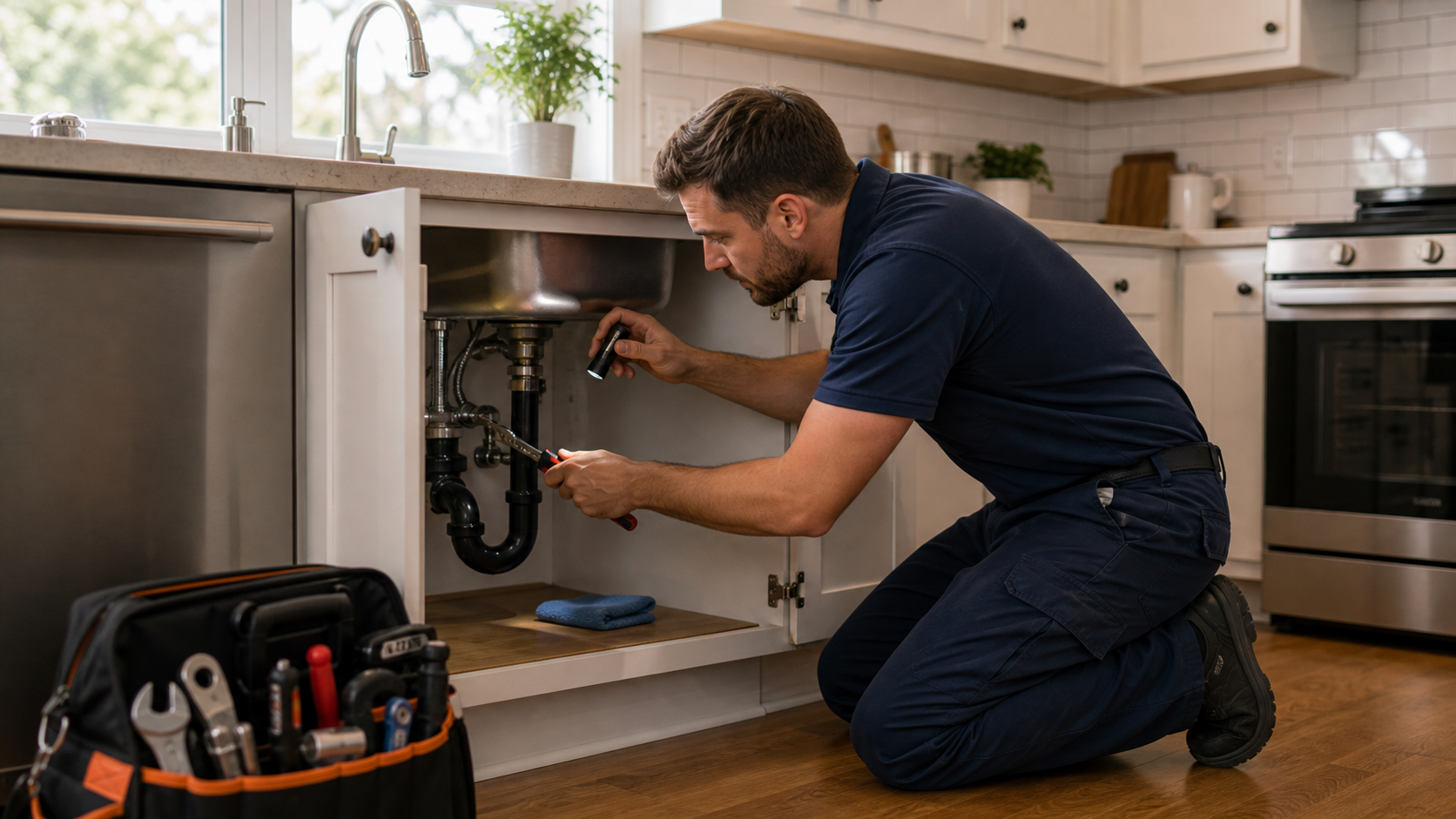
Service scope is the plain-English agreement about what we are coming to inspect, repair, clear, stabilize, or explain during an emergency plumbing visit.
How We Use The Term
When a Frederick homeowner calls about a leak, backup, overflow, or water heater problem, we do not want the visit to feel vague. We ask what is happening, where it is happening, whether water or sewage is active, and what you need most from the appointment. That lets us define the service scope before the work starts.
Scope may be narrow, such as stopping a toilet overflow and checking the fixture. It may be broader, such as isolating a burst pipe, making a repair, testing the line, and explaining whether damaged materials need cleanup. On a drain call, the scope may include clearing the affected drain and determining whether the blockage appears local or main-line.
Why It Matters During An Emergency
Clear scope keeps the visit practical. It tells you what we are trying to solve right now, what we need to inspect, and what result should be clear before we leave. It also separates emergency stabilization from larger follow-up work. That distinction matters when a pipe is active, a sewer backup has created sanitation concerns, or a water heater leak needs a safe decision instead of a rushed guess.
We use scope to talk plainly about limits, too. Some issues can be fixed during the visit. Some can be stabilized so the home is safe for the night. Some need cleanup, drying, camera inspection, fixture replacement, or a scheduled repair after the urgent symptom is under control.
What We Check Before Calling The Scope Clear
We look at the problem area, the fixture or line involved, the available shutoffs, the drain behavior, the water heater connections, and any visible signs of moisture or sewage exposure. Then we test the result. That may mean turning water back on, running the fixture, flushing the toilet, checking nearby drains, or confirming that the leak source has been identified.
The goal is simple: when the visit is done, you should know what failed, what we did, what is safe to use, and what should happen next.